The problem
The data was there. Getting it into a usable report took hours.
Each month, an employee at this transportation company worked through company card transactions, assigned expenses to the right people, and prepared separate reports. Inconsistent names, reversals, and exceptions made it more than a simple spreadsheet exercise.
The familiar problem: capable people spending too much of their time moving information around and checking it, month after month.
Putting AI to work
We turned the employee’s knowledge into a process the team could use again.
Botworks used AI to help analyze the files, investigate discrepancies, and build the processing tools. The employee supplied the business knowledge: which expenses belonged where, which exceptions mattered, and what a correct report should look like.
The monthly process now takes the company’s transaction export and prepares the individual expense reports, with totals checked and exceptions kept visible for review. We compared the first live run with the employee’s own reports. After including a known exception, every report matched her totals.
Beyond the first process
The same approach now supports reporting, investigations, and new finance workflows.
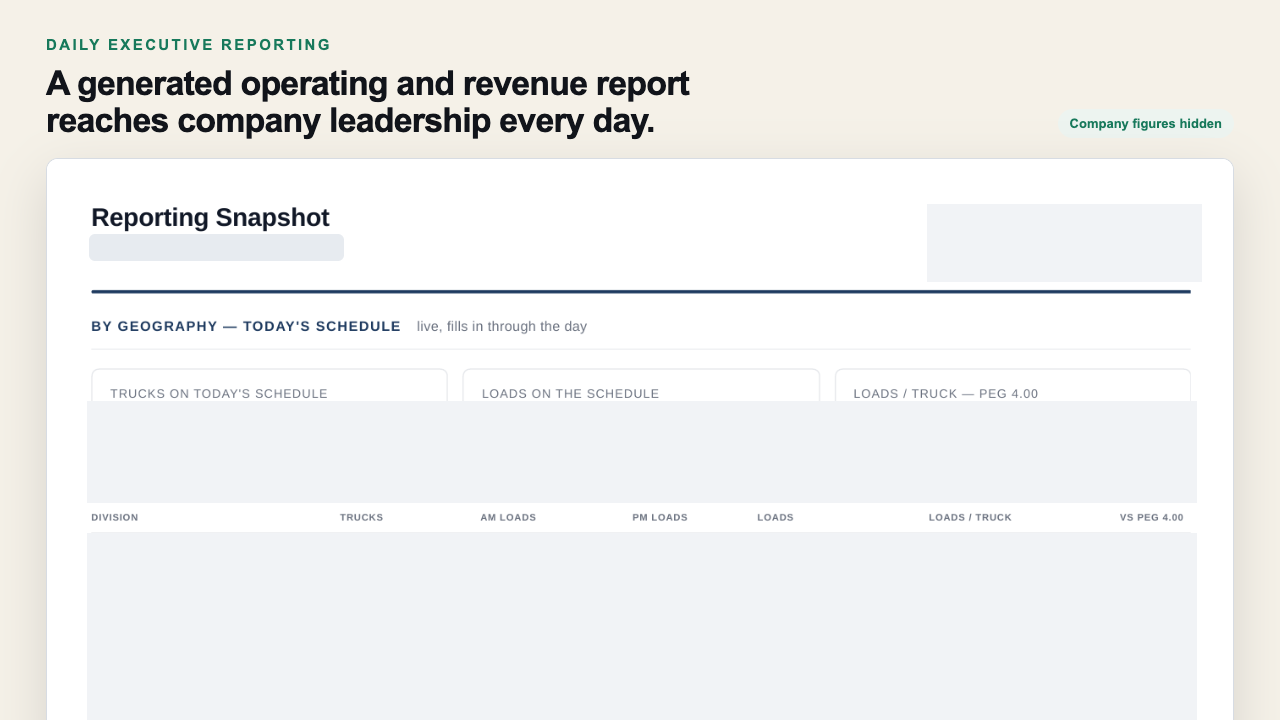
Leadership receives a daily report bringing together activity, revenue, and trends across the business. New questions from the CEO and CFO lead to additional reporting and investigations with the teams who hold the answers.
We are also working on payment calculations that employees were working through by hand. A prototype makes those calculations easier to inspect; payment rules still need validation. New approaches to accounts payable processing are in development.
An ongoing partnership
Every problem solved gives us a better starting point for the next.
Each piece of work builds our understanding of the company’s people, systems, and business rules. That knowledge carries forward as we investigate new issues, connect information across departments, and build better ways to get the work done.
Your version might be reconciling supplier invoices, allocating expenses across plants, or assembling a management report from several systems. The starting point is the same: a recurring job that takes too much effort, and people who know what needs to be right.
What changed
From assembling reports to reviewing the results.
A repeatable expense process for finance, and a daily view of the business for leadership.
The monthly expense report no longer starts from scratch.
Before
Assemble and reconcile by hand.
- Sort a company-wide transaction file.
- Match expenses to the right people.
- Build separate reports and check each total.
Now · running monthly
Start with reports ready for review.
- Process the export using the company’s rules.
- Generate separate reports with checked totals.
- Review the results and resolve exceptions.
Current status
Daily leadership reporting and monthly expense reporting are in use. The payment-calculation tool is a prototype pending validation. Accounts payable work is in development.